The first time I rented a giant water slide for a July birthday, I watched a quiet backyard turn into the happiest place on the block in under 30 minutes. Kids sprinted over with towels as if they were VIP passes, adults parked themselves where the splash zone began, and the day ran itself. The secret was not luck. It was choosing the right inflatable, matching it to the yard, and running a tight plan behind the scenes so the fun stayed safe and smooth.
A giant water slide rental is a showstopper, but it brings real logistics. Water volume, electrical draw, anchoring, line management, and insurance matter just as much as the color of the vinyl. If you do the groundwork, you get a summer bash that feels effortless while your photos look like a resort ad. This guide pulls from years of party rental planning across backyards, parks, and school fields, with the trade-offs, numbers, and on-the-day tactics people usually learn the hard way.
How big is “giant,” really
Most homeowners picture a carnival-sized slide until they see the footprint. Giant generally means a slide height of 18 to 27 feet, sometimes up to 30 for special models. Height is only part of the story. The run-out length, splash pool, blower placement, and safety mats can double the footprint you thought you needed.
Expect these general footprints:
- 18 to 20 feet tall: roughly 30 to 35 feet long, 12 to 15 feet wide, plus a few feet of clearance. 22 to 24 feet tall: around 36 to 45 feet long, 15 to 18 feet wide. 27 to 30 feet tall: often 45 to 60 feet long, 18 to 22 feet wide, longer for dual lanes.
If you are fitting a typical suburban yard, a 20 foot giant water slide rental is huge fun without consuming the whole lawn. Dual lane models increase throughput, which limits line drama. Single lane slides stretch out the ride, which feels faster to a rider but can lead to waits unless you pace the day.
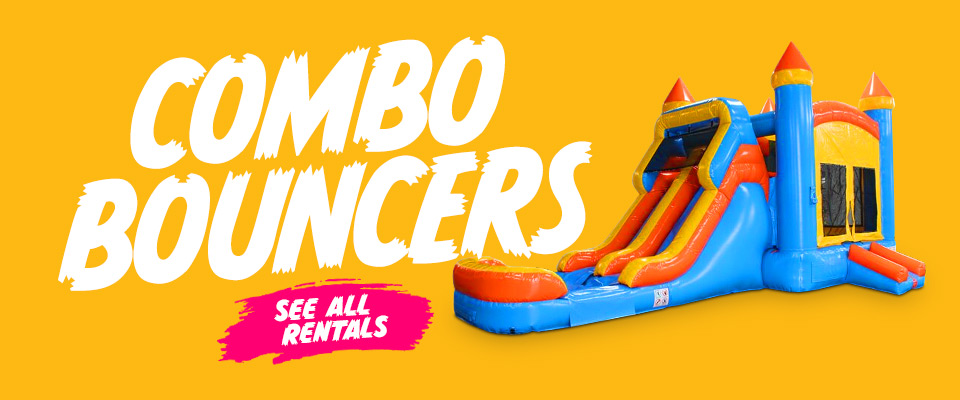
For smaller yards or mixed age groups, consider a wet dry slide rental in the 15 to 18 foot range, or a combo bounce house rental that offers a shorter slide with a small splash pad. Combos are friendlier for younger kids, and they let you switch from water to dry use if a cold front surprises you.
The water and power you actually need
A standard inflatable slide rental uses a regular garden hose from a household spigot. There is no recirculating pump. Water flows at a gentle but continuous rate to keep lanes slick and fill the splash area. Typical flow is 3 to 5 gallons per minute depending on your local pressure and the slide’s soaker line design. Over a four hour party, you can use 700 to 1,200 gallons. Think about where that water drains. Slides should sit on a surface that can handle run-off, like grass that slopes slightly away from patios or fences. Avoid mulched beds that will wash out or clay soil that turns to a skating rink.
Blowers run continuously to keep the inflatable pressurized. Most giant slides use a 1 to 2 horsepower blower, pulling 7 to 14 amps at 120 volts. Some larger dual lane slides use two blowers. Plan on a dedicated 15 or 20 amp GFCI-protected outlet per blower. Use only heavy-duty, outdoor-rated extension cords sized for the run, usually 12 gauge for anything over 50 feet. If you lack outlets or the run crosses the yard, a generator from a party equipment rental company solves it. Ask for a quiet inverter generator if neighbors are close.
Site safety that pays off
Safety is not just about rules for riders. It starts with the surface and anchoring. Grass is ideal because it takes stakes. Asphalt or concrete works with sandbags, but wind tolerance drops. Slides must be clear of overhead power lines and tree branches. The entry and exit paths can get slick, so a strip of outdoor carpet or anti-slip mats where feet land makes a surprising difference. Keep grills and smokers well away. Vinyl gets hot in direct sun, too, so ask the crew to orient the slide so the climb ladder sits in shade if possible. A shade sail or a 10 by 20 tent nearby gives kids and adults a recovery zone.
Set the tone early with supervision. One attentive adult or responsible teen per active slide can prevent 99 percent of issues. If you need to step away, tag someone in. Rotate kids in age bands when the crowd swells, and cap riders per hour with a soft hand. It sounds rigid on paper, but on the day it keeps adrenaline from running the show.
Quick site check before you book
- Measure clear space for the footprint, then add at least 3 feet on all sides for safety and setup. Confirm you have GFCI outlets near the yard or plan on a generator, one circuit per blower. Verify hose reach and run-off direction so water drains away from patios and foundations. Make sure access gates are at least 36 inches wide, wider for the largest units and dollies. Identify shade and seating zones, because people will camp there between runs.
Picking the right inflatable mix
For an all-ages crowd, a giant water slide rental as the main draw pairs well with a second activity that relieves the line. An inflatable obstacle course rental set up dry is a great counterbalance. It moves kids fast, keeps shoes large backyard party rentals on, and gives a win for guests who prefer not to get soaked. If you expect toddlers and preschoolers, a dedicated toddler bounce house rental or compact jumper rental with soft walls creates a safe corral. Older cousins can help there, which gives parents a break.
A combo bounce house rental works when you want one piece to handle the day. It offers a jumping area, a small basketball hoop, and a slide that can run wet or dry. Throughput is slower than a true water slide, but the variety wins with mixed ages and smaller backyards.
What the prices look like and why they vary
Water slide rental prices swing more than most people expect because of size, delivery distance, and demand. As a rough guide in many metro areas:
- Standard bounce house rental prices: 120 to 220 dollars for a 4 to 6 hour window, more for weekends and holidays. Combo bounce house rental: 200 to 350 dollars depending on size and water option. Single lane water slide rental, 15 to 18 feet: 250 to 450 dollars. Giant water slide rental, 20 to 24 feet: 400 to 700 dollars, dual lanes at the higher end. Extra large or specialty slides, 27 to 30 feet: 700 to 1,200 dollars, sometimes more in peak months. Inflatable obstacle course rental: 300 to 900 dollars based on length and complexity.
Prices often include standard delivery and setup within a radius, with 25 to 100 dollar fees outside that zone. Overnight options cost extra, as do attendants if you hire them through the bounce house rental company. Expect a deposit of 25 to 50 percent for busy weekends. Ask about taxes and any damage waiver or insurance add-on, typically 7 to 12 percent of the rental price. If a quote is far below the local average, ask more questions than fewer. Rock-bottom pricing sometimes means older units, spotty cleaning, or light anchoring.
How to evaluate a rental company without guesswork
You are looking for two things: professional process and professional equipment. The first shows up before you pay. Do they ask about your surface, power, and access, or do they just push a booking link? Reputable operators confirm address logistics, gate width, and site photos if the yard is tight. They send written terms with weather and cancellation policies that make sense. Certificates of insurance are available on request, and they carry at least 1 million in liability coverage. They will not set up in unsafe wind or under low lines, even if you beg. That kind of no says a lot about their yes.
Equipment tells its own story. Photos should show clean seams, bright vinyl, and proper blower covers. On delivery, crews arrive on time, tarp the ground at the entry, use stake drivers or heavy sandbags, and walk the unit after inflation to check seams and zippers. They sanitize high-contact surfaces with EPA-registered cleaners. If you can, watch a setup once before the party date by visiting a nearby event they are servicing. Five minutes in person beats an hour of online reviews.
Booking timeline that avoids surprises
Spring and summer Saturdays sell out fast. For a June bash, start shopping by early April if you want the pick of giant slides. Two to three weeks out is still doable for standard sizes, but big dual lane models evaporate first. For holiday weekends, give yourself 6 to 8 weeks.
If your site is a public park, confirm water and power access and rental rules. Many parks do not allow staking, and some require a permit and a certificate of insurance listing the city as additionally insured. HOAs may require notice for yard events with deliveries. None of this is fun to find out at 8 a.m. On setup day when the driver calls from the gate.
Weather is the wildcard, plan for it
Wind is the non-negotiable risk for inflatables. Most slides must come down at sustained winds of 15 to 20 miles per hour, lower for very tall units. Gusts matter more than steady breeze. Rain alone is usually manageable for water slides, but lightning within 10 miles is a hard stop. Good companies outline a weather policy with rescheduling or rain checks if unsafe conditions shut the event down.
A wet dry slide rental gives you a little hedge in shoulder seasons. You can run it dry on a chilly morning, then switch to water if the sun breaks through. Still, decide in advance who calls the weather shots and when. Last-minute indecision is a party killer.
Flow of the day so everyone gets a turn
You can tell the parties where the adults end up drenched because the day drifted. Set a rhythm. Open the slide after your first wave of guests arrive so you are not trying to do greetings and safety checks at the same time. Let littles take the first 15 minutes, then bring in older kids. If you have a big age range, alternate every 20 minutes. Hold back a few towels in a dry spot and stage a sunscreen station near the shade zone. Serve food away from the activity so wet feet do not turn the buffet into a slip course.
When the crowd is large, simple tokens keep it fair. I have used color wristbands by age or poker chips for the next 10 riders. It sounds formal, but kids treat it like a game and lines stay cheerful. For birthdays, let the guest of honor choose the final song change or last run of the day. That small rite helps round people up for cake when the slide is still calling their name.
Simple five-step playbook for the big day
- Two hours before guests: crew sets up, you run water and power checks, lay out towels, sunscreen, and a small first aid kit. One hour before: place signs or a chalkboard with simple rules, confirm the supervising adult rotation, test the soaker line and splash depth. Start time: greet, give the 30 second safety talk, open the slide by age group, turn on upbeat music near the shade zone. Mid-party: flip to obstacle course or dry jumper rental rotations for short breaks, serve food while the slide rests so you do not mix wet hands with serving tongs. Last 20 minutes: call last runs, photo time, then shut water and keep the blower on for 10 to 15 minutes to drain and dry the slide before pickup.
Rules that work because they are short and clear
Keep your posted rules simple enough that kids repeat them to each other. One at a time on the ladder, feet first on the slide, no flips, wait for the landing to clear, and no rough play at the entry. Shirts stay on for sun protection and traction. No jewelry, no eyeglasses on the slide, and no drinks anywhere near the inflatable. If friends arrive with cut-off jeans or metal belt details, steer them to the dry activities to protect the vinyl.
Water management without swampy grass
Most lawns love a deep soak when the soil is warm. Trouble starts with poorly placed splash exits or inflatable party rentals saturated clay. Angle the slide so the exit splash runs along the lawn edge, not over your patio seams or into the mulch. If the slide has a big pool, do not overfill. You want just enough water to cushion landings. Add anti-slip mats where wet feet step to concrete. When you shut water off at the end, leave the blower running. Most of the standing water will drain in 10 minutes. If you need to move water off a patio afterward, a simple push broom works better than a mop.
Power and extension cord sense
Never daisy-chain cords. A 100 foot, 12 gauge extension is safer than two 50 foot, 14 gauge cords clicked together. Keep cords away from water paths, and cover them with rubber mats or cord covers where guests walk. If the blower trips a GFCI, find the cause before resetting. Common culprits are wet cord connections or another appliance sharing the circuit. Plug blowers directly into power with no household appliances on the same breaker. If you use a generator, place it downwind, 20 feet from guests, with a fuel check plan that does not interrupt the party.
Cleanliness and what to expect at pickup
Reputable crews sanitize at setup, but the most hygienic parties also keep wipes and hand sanitizer near the slide exit and food areas. Remind kids to use the bathroom before they line up. If the worst happens, shut the slide and call the company. Most carry cleaning kits and have a process. At pickup, the crew will deflate and roll the unit. Do not help unless asked. These are heavy, and teamwork with the trained crew prevents strain and scuffed vinyl. Expect some damp grass. It dries by morning in summer heat.
Choosing between giant slide types
There are two core experiences: height and speed vs. Capacity and game feel. A 22 foot dual lane with a sharp angle gives a racing vibe that keeps older kids and teens hooked. A 20 foot single lane with a longer run-out feels fast but is gentler and often fits better in a backyard party rental. Tropical themes with palm shapes photograph well, but darker colors can heat up. If shade is limited, lighter color vinyl is nicer for hands and feet.
Some giant models offer slip-n-slide extensions. They look incredible and run long, but they demand more flat space and more water. They also can wear out grass in a day. If you are proud of your lawn, weigh that cost. For tight lots, a tall, compact footprint beats a long run every time.
Pairing add-ons that make the day easier
Tents and chairs from a party rental vendor are boring to shop for, but they pay for themselves in comfort. A 10 by 20 canopy near the action creates a village center. A portable misting fan helps on triple digit days. If your hose bib is far, order a 100 foot commercial hose and a Y splitter so you can still run a sprinkler for toddlers. For night parties, consider LED string lights around the shade zone. Keep the inflatable itself unlit and power disconnected at dark for safety.
If you expect a crowd, a dunk tank is a photogenic extra that stops lines from building. For younger sets, a foam machine turns a corner of the yard into a sensory sandbox and pairs well with an inflatable party rental that is kept dry.
Dealing with parks, schools, and fields
Public spaces trade yard convenience for room to run. For an inflatable obstacle course rental at a school field, confirm access roads and weight limits for delivery vehicles. Some fields forbid stakes to protect irrigation, so make sure the company brings enough ballast. Water at parks can be locked or limited, so scout the spigots and ask for the key early. A generator is almost always needed. Bring extra trash bags and assign someone to do a perimeter sweep every hour. You will be shocked what migrates onto the grass.
What adults need to know to enjoy it too
Adults end up far wetter than they plan, no matter what they say during setup. Stage towels in a basket near the slide and set expectations about shoes. If you want adults to slide safely, choose a model with a wider landing and deeper splash. Keep drinks in cans with lids or set a no-beverage zone near the inflatable. Music volume creeps up with excitement, so have a baseline playlist and a volume limit if neighbors are within earshot. A quick hello to adjacent neighbors the day before with your party hours buys goodwill no speaker can.
Hidden constraints that catch people
Gate width is the silent party killer. A 36 inch gate is usually enough, but decorative angles and hinges steal inches. Measure hinge to hinge, not post to post. Slopes matter. A gentle grade is fine, but a noticeable tilt makes a slide feel unsafe. Put a level on the ground if you are unsure. Dogs and chickens love inflatables. Plan a spot indoors for pets during setup and the busiest hours. Finally, shoes. If you do not set a shoe station near the entry, your yard will look like a garage sale exploded. A small rug and two bins fix it.
Working with the company on timing
Companies like to set early and pick up late because routes are packed. If you need a tight window, ask at booking, not the morning of. Offer photos of your yard so they can plan. If you want to keep the inflatable longer, overnight rates are usually a fraction of a second day. That can make sense for a family BBQ the next morning. Confirm overnight security, wind guidelines, and whether the blower stays on. Many companies require you to shut it down overnight and re-inflate in the morning with a quick safety check by phone.
Who should not ride and how to tell people
Every inflatable has a posted weight limit and rider rules. As a host, invite guests to be honest about injuries and mobility. Knee problems and fresh piercings do not mix with big slides. Pregnant guests should skip it. If anyone is reluctant, steer them to the obstacle course or lawn games. The goal is a day where everyone feels included without pressure.
A note on hygiene and quality of units
Look for units with smooth seams, intact anchor points, and stitching that lies flat. Blemishes are fine. Sticky vinyl from soap residue or mildew smell is not. Ask how often they deep clean and how they dry units after water events. Drying takes space and fans, and not every operator has them. The best ones do, and it shows when you walk up to a fresh slide that looks and smells like summer, not a locker room.
Bringing it all together
When you choose a giant water slide rental with your space, guests, and utilities in mind, the rest is choreography. Match the slide to your yard, set safety into the bones of your plan, and build small comforts around the edges. Work with a bounce house rental company that treats your party like a project, not a dispatch line. Use an inflatable slide rental as the centerpiece, and flank it with an inflatable obstacle course rental or a toddler bounce house rental as your crowd demands. Keep an eye on bounce house rental prices and water slide rental prices with context, not just a sticker shock reaction. You will spend a little more for the right size, insurance, and professional crews, and you will see every dollar in the smiles, the photos, and the easy way the day moves.
The biggest compliment I hear after these parties is the one that seems simplest. Guests say it felt like there was always something fun to do and nothing they had to do. That feeling is what you get when the planning hides under the splash and laughter. It is what turns a backyard party rental into the best summer memory on your street.